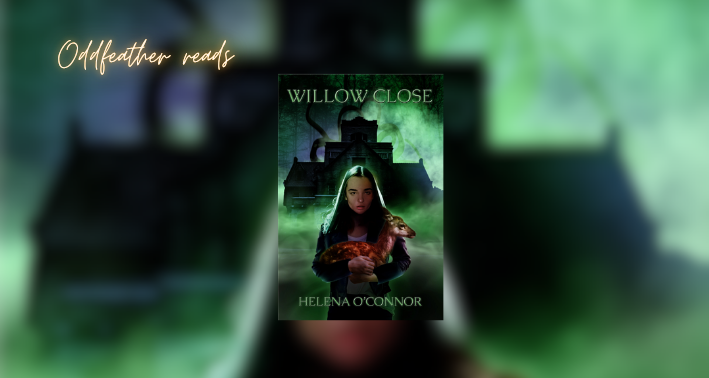

Helena O’Connor’s Willow Close is a novella that combines elements of cosmic, psychological, and thrasher horror. It uses these horror genres to explore themes of memory, loss, and healing the past to move forward into the present.
Kess Hawkins just wants to play computer games, hang out with her cat, and support herself with her small business selling and installing home PCs. But when a journalist seeks her out and shows her a photograph of herself as a child, tells her about the orphanage Willow Close, Kess must face the mystery that is her origins, the childhood that she has no memory of. The journalist, Mish, is tracking a serial killer dubbed the Family Man who has been working his way down the coast to their home of New Haven, and there seems to be some kind of connection between him, Kess, and the mysterious orphanage that she has no memory of.
Kess and Mish investigate, digging up personal histories, revisiting a past that was somehow buried and is now slashing and oozing its way to the surface. In a race against time, with bodies dropping like bloody flies around them, they must discover the connections between a 1980s chemical spill, the orphanage, a strange shared dream, the serial killer, an elderly woman who somehow knows Kess, a teacher, and a bridge-player from the local yacht club.
Willow Close is an interesting undertaking. O’Connor fits a huge amount of imagery, characters, plot, and themes into this 114-page volume and the various cosmic, psychological, and slasher horror elements feel quite disconnected and disparate for the first two-thirds of the story. At times it feels as though the book would benefit from a longer format so that each genre can be more fully explored. But by the end, everything is carefully threaded together in a series of revelations that, thankfully, ties it all together by the final page.
It takes some skill to pull several different kinds of horror together into one story. This is a very Halloween-y book, good for fans of slasher and cosmic horror in particular.
This review first appeared in Aurealis magazine, issue #186.